- Description
- Curriculum
- Reviews
This course provides healthcare professionals and staff with practical knowledge and hands-on skills to recognize, prevent, and respond to email-based threats. Participants will learn why email remains the #1 attack vector, how to identify common phishing tactics, and how to apply best practices for password hygiene, multi-factor authentication, encryption, and secure email handling under HIPAA. Real-world healthcare case studies, interactive exercises, and quizzes reinforce learning.
By the end of the course, learners will be able to:
Spot phishing, spoofing, and Business Email Compromise attempts.
Safely verify suspicious emails and avoid risky behaviors.
Apply policies on acceptable use, retention, and encryption.
Follow HIPAA requirements for handling PHI in email communications.
Report incidents promptly and understand escalation and containment steps.
-
1
 Why email remains the #1 attack vector
Email persists as the #1 attack vector because it combines ubiquity, human psychology, and low attacker cost with high potential reward. Even the best technical defenses can’t fully block human error, which makes continuous training and awareness the most critical line of defense.
-
2
Common threats in email security
Summary for Training
-
Phishing = broad, generic attacks.
-
Spear-phishing = highly targeted, personalized attacks.
-
Spoofing = pretending to be someone else (via fake sender).
-
BEC = tricking organizations into financial fraud.
-
Malware delivery = using email as a vehicle for ransomware or spyware.
-
-
3
Real-world case studies
-
No organization is immune — Fortune 500, government, healthcare, small businesses have all been hit.
-
Email is often just the start — attackers pivot into networks, deploy ransomware, or commit fraud.
-
Costs are enormous — financial losses, lawsuits, compliance penalties, reputational harm.
-
Human error remains key
-
-
4
Recent Healthcare Email Security Breaches
-
8
Types of Phishing Attacks
-
9
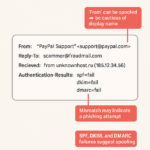
Red flags in emails
-
10
Social Engineering Psychology in Email Attacks
✅ Training Takeaways
-
Phishing is psychological first, technical second.
-
If an email makes you feel fearful, rushed, or overly trusting, pause before acting.
-
Encourage a security-first culture where questioning authority or double-checking requests is seen as responsible, not insubordinate.
-